Loading...
Natural and manufactured stone walls, retaining structures, patios, and steps for Santa Barbara homes - properly drained, locally permitted, and matched to your property's character.
Stone masonry in Santa Barbara means cutting, setting, and bonding natural or manufactured stone to build walls, patios, steps, and retaining structures, with most small residential projects taking one to three days on-site and larger retaining walls or full patio installations taking one to three weeks depending on size, permit requirements, and site access.
For homeowners in Santa Barbara, stone masonry tends to come up in two situations: you have a hillside property that needs a proper retaining wall, or you want to add a patio, set of steps, or garden feature that actually complements the city's Spanish Colonial and Mediterranean architecture rather than clashing with it. Both situations require the same foundation: stable soil preparation, the right mortar for local conditions, and - on sloped properties - proper drainage behind the stone so water does not build up pressure against the wall. If you are also considering connecting new stone work to an existing structure, it often makes sense to pair the project with brick pointing on any aging mortar joints nearby so the whole property looks consistent when the job is done.
Stone lasts. A well-built stone wall or patio in Santa Barbara will still be standing and looking good in 50 years with minimal maintenance - the only part that ages meaningfully is the mortar between the stones, and that can be refilled when needed. In a market where outdoor space is used year-round and buyers pay close attention to craftsmanship, that longevity translates directly into property value.
A visible tilt or a gap forming between a wall and the hillside behind it signals that the wall is under stress it was not designed to handle. In Santa Barbara's hillside neighborhoods, this often happens after a wet winter when water-saturated soil puts extra pressure on aging walls. A wall that is already moving can fail quickly, and the damage to your yard or foundation will cost far more to fix than the wall repair itself.
Run your finger along the joints between stones on an older wall or patio. If the mortar crumbles out easily, feels soft, or has gaps where it has fallen away, water is getting in. In Santa Barbara, where coastal air carries salt and moisture, deteriorating mortar can accelerate quickly once it starts. Repointing those joints with fresh mortar is a straightforward repair that prevents much larger problems later.
If a patio stone rocks when you step on it, or if steps have developed a noticeable slope or dip, the base beneath the stone has likely shifted. This is a tripping hazard and a sign that water or soil movement has undermined the foundation of the work. In Santa Barbara's hillside and mesa neighborhoods, soil movement after rain events is a common cause of this kind of settling.
If water collects against your house after a storm, or if you can see erosion channels forming in your yard, your drainage situation needs attention. Stone retaining walls and graded stone features can redirect water away from your foundation. Given Santa Barbara's pattern of dry summers followed by intense winter rain events, this is a problem that tends to announce itself suddenly - and it is worth addressing before the next rainy season.
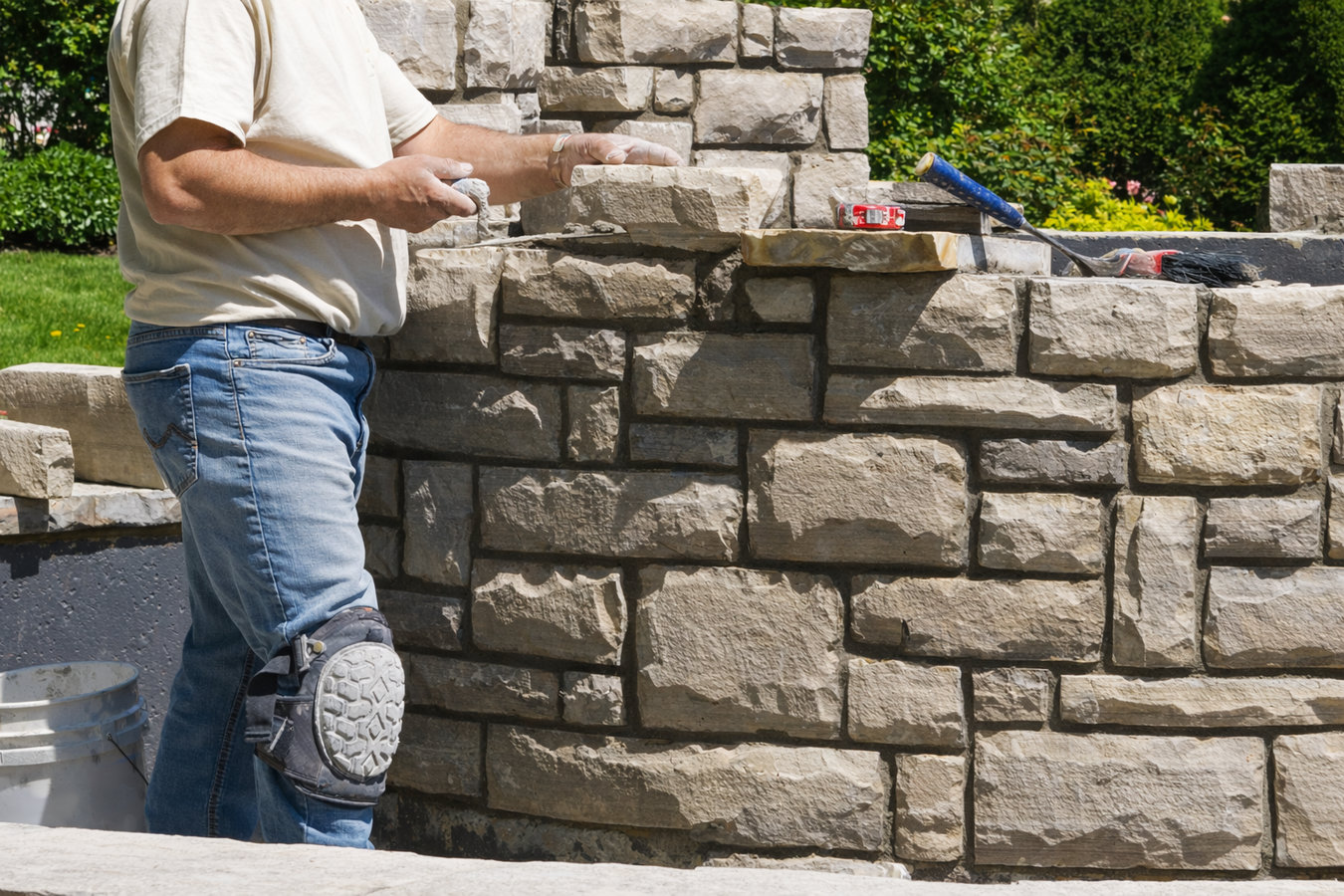
The most common requests we handle in Santa Barbara are hillside retaining walls, garden walls and planting borders, outdoor steps and patios, and feature walls for entries and courtyards. Every project starts the same way regardless of scope: a site visit, a soil and grade assessment, and a discussion about stone type and finish. For hillside retaining walls in particular, we always design drainage into the wall before a single stone goes up - gravel backfill and perforated drain pipe behind the face stone so water has somewhere to go rather than building up pressure. We also work with homeowners who want to connect new stone features to existing structures, and we often pair stone wall builds with stone veneer installation on adjacent surfaces for a cohesive result across the entire outdoor area.
Material selection matters as much as installation technique. Natural stone - granite, limestone, fieldstone - has unique color and texture variations that manufactured stone cannot fully replicate, but it typically costs more and adds more weight to the structure. Manufactured stone is made from concrete and pigment to look like natural stone, costs less, and works well for veneer applications and lighter feature walls. A good contractor will walk you through both options and explain the trade-offs honestly based on your site conditions and budget, not just what is easiest to install. The goal on every project is work that looks right in ten years, not just on installation day.
Structural walls that hold back soil on hillside lots and sloped properties - the right choice for Santa Barbara's Riviera and foothill neighborhoods where erosion during winter rains is an ongoing concern.
Low decorative walls used to define planting beds, border a patio, or add character to an outdoor space - suits homeowners who want the warmth and permanence of natural stone without a large structural project.
Flat stone surfaces and step sets for outdoor living areas and entries - a popular choice for Santa Barbara homes where outdoor space is used year-round and natural materials complement the city's architectural character.
Custom stone walls for courtyard entries, fireplace surrounds, and architectural accent features - suits homeowners who want stonework that becomes a defining element of their home's outdoor or indoor space.
Santa Barbara combines three conditions that shape every stone masonry project here. First, a large portion of residential neighborhoods sit on hillside terrain - the Riviera above downtown, the foothills along the Santa Ynez Mountains - where retaining walls are not optional extras but functional necessities. The City of Santa Barbara requires building permits for walls above certain heights, and on hillside lots you may also need a soils report or engineering review before a permit is issued. A contractor unfamiliar with local requirements will slow your project down. Second, the 2018 Montecito debris flow showed what happens when hillside properties lack adequate drainage infrastructure - and that event changed how many homeowners in the area think about slope stability and water management. Third, Santa Barbara's Mediterranean climate means outdoor stone features get used and tested every month of the year, not just in summer, which means durability and material selection matter more than they would in a colder, drier climate. We work throughout Santa Barbara and also serve homeowners in Montecito and Santa Ynez, where hillside conditions and local design expectations are similarly demanding.
Beyond the physical conditions, Santa Barbara has one of the most design-conscious homeowner bases in California. The city's Spanish Colonial Revival identity - white stucco, red tile roofs, arched openings - creates a visual context that stone work needs to respect. Many neighborhoods also fall under HOA oversight or the city's Architectural Board of Review, which means exterior changes to walls and steps may need approval before a permit is filed. We are familiar with this process and factor it into every project estimate from the beginning, so design review does not become a surprise that pushes your timeline back by weeks. The Natural Stone Institute sets quality and ethics standards for the stone industry, and those standards are the baseline we work from on every project.
When you reach out, we will ask a few questions about your project and schedule a site visit before giving you any numbers. We respond to all initial requests within one business day. Sharing a few photos of the area ahead of the visit helps us understand the scope and come prepared with relevant material options.
We visit your property, assess site conditions, measure the area, and discuss your goals and stone preferences. In Santa Barbara, we also flag whether your project is likely to need a city building permit or design review approval - which affects both cost and timeline. You receive a written estimate that separates labor, materials, and any permit fees.
If your project requires a building permit - common for retaining walls above a certain height or for work in design-review areas - we handle the application on your behalf. This step can add one to four weeks to your start date depending on the city's current workload. We keep you informed throughout so the process does not catch you off guard.
Stone and materials are delivered to your property before work begins. The crew sets up, protects nearby plants or surfaces, and prepares the base layer. Actual masonry work typically runs one day for small projects and up to two to three weeks for larger retaining walls or patios. Fresh mortar needs 24 to 48 hours before it can handle weight - we walk you through care instructions at the end of every job.
We visit your property, assess the site, and give you a clear written breakdown - labor, materials, and permit costs all separated out. No obligation, no pressure.
(805) 869-0735A stone retaining wall without proper drainage behind it will fail - often within a few wet seasons. The 2018 Montecito debris flow put a sharp focus on how quickly hillside conditions can turn dangerous when water has nowhere to go. We install gravel backfill and drainage pipes behind every retaining wall before the stone goes up, not as an upgrade but as a standard part of how a wall should be built. The Mason Contractors Association of America covers these drainage standards as core professional practice.
Santa Barbara's permitting and design review process is more involved than most California cities. Retaining walls above certain heights require building permits, and homes in historic districts or HOA-governed neighborhoods may need Architectural Board of Review approval before exterior stone work begins. We handle permit applications and design submissions as part of the job and flag these requirements during the estimate visit so there are no timeline surprises.
Santa Barbara's coastal salt air, intense summer sun, and periodic heavy winter rain all affect how stone holds up over time. Dense, low-absorption stones perform best here, while softer, more porous materials can flake and deteriorate faster than inland climates suggest. We recommend stone types based on your specific site conditions and the orientation of the work, not just what looks good in a sample yard.
Santa Barbara has a distinct look - Spanish Colonial, Craftsman, Mediterranean - and stone work that clashes with your home's style will stand out for the wrong reasons. We have built walls, steps, and patios across Santa Barbara's neighborhoods and understand what materials, proportions, and finishes look right in this city. The Natural Stone Institute sets quality and ethics standards for the industry, and those standards are the baseline we work from on every project.
Drainage, permits, material selection, and architectural fit all determine whether stone masonry holds up and adds value in Santa Barbara or becomes a problem down the road. We bring all of it together so you end up with work you can count on.
Restore failing mortar joints on existing stone or brick structures before water intrusion turns a simple repair into a costly rebuild.
Learn MoreAdd the look of natural stone to exterior walls, columns, or interior feature walls without the weight and cost of full-depth stone masonry.
Learn MoreSanta Barbara's permit process and contractor schedules fill up quickly in spring - reach out now to get a site visit scheduled and your project in the queue before the wait gets longer.